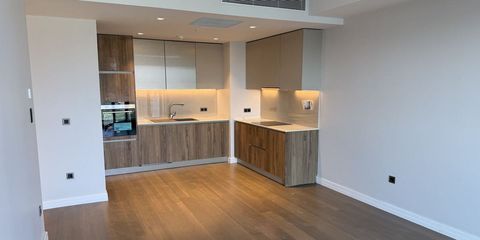
Ask five agents what Istanbul apartments yield and you will hear five numbers, most of them gross, some of them invented. The honest answer as of early 2026: citywide gross rental yields hover around 7% a year, and district-level figures run from under 5% in the most prestigious areas to roughly 9% in value districts. The net figure you actually bank is typically 1.5 to 2.5 percentage points below whatever gross number you were quoted.
Let's take those numbers apart properly.
Gross yield vs net yield: the two-point gap
Gross yield is annual rent divided by purchase price. A flat bought for the lira equivalent of $150,000 renting at $875/month grosses:
$875 × 12 = $10,500 → $10,500 / $150,000 = 7.0% gross
Net yield subtracts what ownership costs. Same flat, realistic annual deductions:
- Aidat (the building's monthly service charge), for the months the flat is empty and it falls on you: say $300
- Vacancy (one month between tenants every two years averages to ~4% of rent): $440
- Maintenance and small repairs: $500
- DASK earthquake insurance plus property tax: $250
- Income tax on the rent (varies with your bracket and expense method): $900–1,500
- Management fee if you are abroad (typically ~one month's rent or ~8%): $875
That is roughly $3,300–3,900 off the top, leaving $6,600–7,200 net — a 4.4–4.8% net yield on the same "7% flat". This gap is not pessimism; it is arithmetic that sellers rarely perform in front of you. Run your own numbers in our rental yield calculator before you commit to anything.
Price-to-rent multiples: the sanity check
Turkish investors think in amortisman: how many years of rent repay the purchase price. It is simply the inverse of gross yield:
- 14 years' rent = ~7.1% gross
- 17 years = ~5.9% gross
- 20 years = 5.0% gross
- 25 years = 4.0% gross
Istanbul's citywide average has recently sat in the 14–17 year band. That is dramatically better for landlords than the 25–30+ years common during the 2021–2023 price boom, because rents caught up violently after the 25% rent cap expired in mid-2024. When a seller's asking price implies 22+ years of rent in an ordinary district, either the price is wrong or you are buying appreciation potential, not income. Be clear with yourself about which.
What districts realistically deliver
Figures below are gross yield ranges consistent with late-2025 / early-2026 market data. Treat them as bands, not promises: the spread within a district is wider than the spread between districts, and wider still than the difference between the European and Asian sides.
High-yield value districts: ~8–9.5% gross
Esenyurt, Beylikdüzü, Fatih, Zeytinburnu, Küçükçekmece, Kartal. Esenyurt has recently topped district rankings at around 9.4% gross; Fatih studios reach similar territory. Low entry prices, deep local tenant demand. The trade-offs: heavier tenant turnover, more hands-on management, and in oversupplied pockets of Esenyurt, real vacancy risk and slower resale.
Balanced middle: ~6.5–8% gross
Kağıthane, Eyüpsultan, Maltepe, Pendik, Ümraniye, Beyoğlu. Metro-connected, gentrifying or steadily growing, with a mix of local professional and family tenants. Often the best risk-adjusted zone for a first Istanbul investment: decent yield without frontier-market management headaches.
Prestige districts: ~4–5.5% gross
Kadıköy, Beşiktaş, Nişantaşı/Şişli's prime streets, Bosphorus-facing Üsküdar, Sarıyer. Prices have run far ahead of rents, pushing Kadıköy below 5% gross. You accept a thin income return in exchange for the strongest long-term appreciation, the most liquid resale market and the most reliable tenants in the city. Nothing wrong with that, as long as you did not buy it for the yield.
Unit size matters as much as district: studios and 1+1s citywide gross roughly 7–9%, while 2+1s and larger family flats gross 6–8%. Small units rent faster and yield more; large units keep tenants longer.
The costs that quietly eat your yield
Aidat
Service charges are the silent killer in branded residence projects. A compound with pools, gyms and 24-hour security can charge aidat equal to 10–20% of the achievable rent. Tenants pay aidat while the flat is occupied. But high aidat suppresses the rent tenants will offer, and during vacancy it is entirely yours. A cheap flat with expensive aidat is not a cheap flat.
Tax
Residential rental income above an annually updated exemption threshold must be declared, with progressive rates starting at 15%. Most small landlords use the lump-sum expense method, deducting a flat 15% of income; owners with large documented costs may do better itemising. Either way, budget roughly 14–17% of gross rent for tax at typical single-flat income levels. The worked example below, and our fuller guide to rental income tax for landlords, both land in that range.
Vacancy and turnover
Every tenant change costs you: a month of vacancy, cleaning, paint, perhaps an agent's placement fee. In high-churn districts, assume a move every 2–3 years. Under Turkish law, sitting tenants renew at capped increases (the 12-month average CPI), so in high-inflation years long-staying tenants can drift well below market. That is good for stability, bad for yield until the flat turns over.
Currency
You earn lira. If you think in dollars or euros, lira depreciation between rent collection and conversion is a real cost line, partly offset by the inflation-linked annual increases. Yield calculations done purely in hard currency over multi-year holds have historically looked worse than the lira figures. Price that in rather than discovering it later.
A worked example, end to end
2+1 in Kağıthane near the metro, bought at ₺8,500,000, renting at ₺55,000/month:
- Gross: ₺660,000 / ₺8,500,000 = 7.8% (a ~13-year price-to-rent multiple — good)
- Vacancy at 4%: ₺26,400
- Maintenance: ₺30,000 · building insurance and property tax: ₺12,000 · management at 8%: ₺52,800
- Income tax: ₺660,000 less the residential exemption (₺47,000) is ₺613,000; less the 15% lump-sum deduction leaves a ₺521,050 base; run through the progressive tariff that comes to roughly ₺110,000
- Total deductions: roughly ₺231,000
- Net: ₺429,000 / ₺8,500,000 = ~5.0% net
A 5% net yield plus Istanbul's long-run price appreciation is a respectable total return. The appreciation half only turns into money when you sell, though, and selling an Istanbul flat from abroad has a calendar of its own, notably a five-year clock on capital gains. Just make sure every deal you evaluate survives this same arithmetic, not the brochure's.
If you would like a specific building assessed against real closed rents rather than asking prices, Turc Global runs these numbers for investors daily. Start with a free valuation or browse current investment cases.