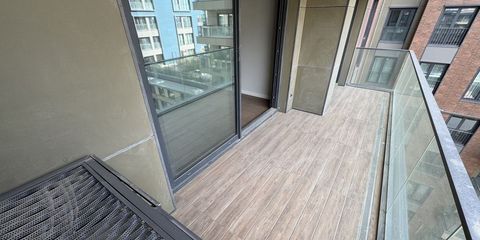
You bought an apartment in Istanbul, and now it sits empty while you live in London, Dubai or Berlin. Every month it stays vacant, you lose rent and keep paying the aidat, the building's monthly service charge. The good news: Istanbul's long-term rental market is deep and fast-moving. A correctly priced apartment in a decent district rarely waits more than a few weeks for a tenant. The bad news: the process runs in Turkish, on Turkish platforms, under Turkish contract law, and mistakes at the start are expensive to fix later.
Here is how the process actually works, in the order it happens.
Step 1: Price it against the street, not your hopes
Owners abroad tend to price against what they paid, or against what a friend's flat rents for in another district. Tenants price against the three most similar listings within walking distance. That is the only comparison that matters.
Practical method:
- Pull the last 10–15 comparable listings in your building's immediate area (same room count, similar floor, similar condition).
- Discard the top three: overpriced listings sit for months and are not the market.
- Position yourself in the middle of what remains. In Istanbul, a flat priced 5% under the optimistic average often rents in days, not weeks, and one month of vacancy usually costs more than that discount ever will.
Remember that asking prices on portals are not closing prices. Negotiation of 5–10% is normal, especially outside the August–September peak season when families move before the school year.
If you want a data-based number instead of guesswork, start with a free rental valuation before you list.
Step 2: Choose your marketing channels
For long-term rentals in Istanbul, three channels do almost all the work:
- Sahibinden.com: the dominant portal by a wide margin. Almost every serious tenant searches here first. Listings require a Turkish phone number and identity verification, which is a real obstacle if you are abroad; most remote owners list through a local agent instead.
- Hepsiemlak and Emlakjet: the second tier. Worth listing on, particularly for corporate and relocation tenants, but they generate a fraction of Sahibinden's traffic.
- Agency networks and referrals: in districts with heavy expat or corporate demand (Şişli, Beşiktaş, Kadıköy, Ataşehir), a well-connected local agent often places tenants before a listing goes public.
Photos matter more than description text. Shoot in daylight, declutter, and lead with the living room or the view. Listings with dark phone photos attract exactly the tenants you do not want.
Step 3: Screen tenants properly
This is where remote owners get hurt. Turkish law protects sitting tenants strongly: evicting a non-paying tenant through the courts can take a year or more. Screening is your real protection, not the contract.
Minimum checks before you sign:
- Income proof: payslips (maaş bordrosu) or, for self-employed applicants, tax returns. A common rule of thumb: net household income of at least three times the rent.
- Employment verification: a quick call to the employer's HR, or an SGK (social security) registration document.
- Previous landlord reference: did they pay on time, did they leave the flat in good condition?
- Findeks credit score: Turkey's consumer credit report. Serious applicants will share it; refusal is informative in itself.
A guarantor (kefil) who co-signs the contract adds real security, especially for younger tenants. For a guarantor's obligation to be enforceable, the guarantee amount and duration must be handwritten by the guarantor in the contract, a formality Turkish courts take seriously.
Step 4: The contract, in Turkish
The kira sözleşmesi (rental contract) is legally valid in Turkish. You can attach an English translation for your own understanding, but the Turkish text governs. Key clauses to get right:
- Rent amount and currency. For residential leases with a Turkish tenant, rent must generally be set in Turkish lira. Annual increases at renewal are capped by law at the twelve-month average of consumer inflation (TÜFE). You cannot contract around this ceiling, so the starting rent matters enormously.
- Term. One year is standard. Note that in Turkey the tenant can renew almost indefinitely; the landlord's right to end the tenancy is limited to specific legal grounds.
- Use and subletting. Explicitly prohibit subletting and short-term (Airbnb-style) sublets, which additionally require a state licence the tenant will not have.
- Aidat. State clearly that the tenant pays the monthly service charge. This is customary but should be written.
- Vacate undertaking (tahliye taahhütnamesi). Many landlords ask the tenant to sign a dated written commitment to leave on a set date, signed after the contract, and have it notarised. Courts scrutinise these, but a properly executed one meaningfully strengthens your position.
Have the tenant's ID checked against the person signing. It sounds obvious; it gets skipped.
Step 5: Deposit and payments
The legal maximum deposit is three months' rent; in practice one or two months is the market norm. Under the Code of Obligations, a cash deposit should be placed in a blocked bank account in the tenant's name. In reality most parties handle it informally, but you should at minimum document the amount in the contract and give a receipt.
Insist that rent is paid by bank transfer with the tenant's name and the month in the description. This creates the payment record you will need for your annual rental income tax filing and for any future dispute. Cash rent with no paper trail is a gift to a bad tenant.
Step 6: Key handover and the condition report
Before keys change hands, walk the flat with the tenant (or have your representative do it) and sign a handover report (teslim tutanağı) recording:
- Meter readings for electricity, water and gas
- Condition of walls, floors, appliances and fixtures, with dated photos
- Number of keys, fobs and remotes delivered
The tenant then transfers utility subscriptions into their own name. Do not leave utilities registered to you, or unpaid bills become your problem. The same report, updated at move-out, is what determines deposit deductions without an argument.
What this looks like from abroad
Everything above is doable remotely with a power of attorney and a trustworthy local partner — and nearly impossible without one. Listing verification, viewings, screening calls, contract signing, handover: each step assumes someone is physically in Istanbul and speaks Turkish. Ongoing matters like rent renewals and maintenance need the same local presence year after year. What a full twelve months of managing a flat from abroad involves is set out separately.
Turc Global manages this entire cycle for foreign owners, from valuation and listing to screening, contracts and handover. If you would rather own the asset than run the process, talk to us.